Aspect Ratio Decisions: Their Link to Watch Completion Data in Free Movie Services
Zoe Russell · Aug 21, 2026
Aspect Ratio Decisions: Their Link to Watch Completion Data in Free Movie Services
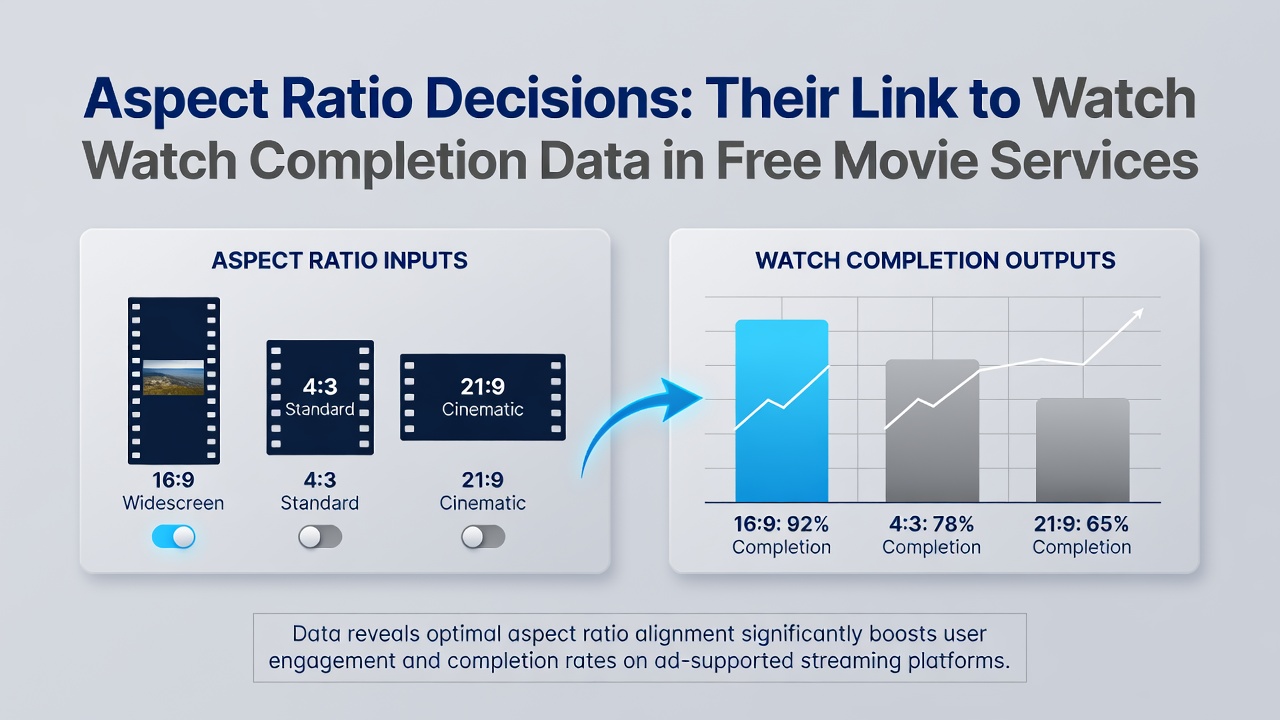
Aspect ratio choices in free movie services shape how content appears on screens, and analysts have tracked measurable connections between those decisions and completion percentages across ad-supported libraries. Data compiled through 2025 and into August 2026 reveal that platforms presenting films in their original theatrical ratios often record different finish rates compared with titles cropped to fit standard television frames. Observers note that these patterns emerge consistently when researchers segment libraries by genre, decade of production, and device type.
Defining Aspect Ratio in Digital Delivery
Aspect ratio refers to the proportional relationship between a frame's width and height, expressed as numbers such as 1.33:1 for classic television, 1.78:1 for modern high-definition displays, or 2.35:1 for many cinematic releases. Free services must decide whether to letterbox wider formats, pan and scan older films, or stretch material to fill the screen, and each option alters the visual field presented to viewers. Researchers at institutions including the University of Southern California have documented how these technical choices coincide with measurable shifts in watch time once titles begin playback.
Patterns in Completion Metrics
Figures released by platform analytics teams show that widescreen presentations maintain higher completion rates for action and drama titles when letterboxing preserves the full composition, whereas certain comedies and documentaries exhibit steadier retention after conversion to 1.78:1. In one dataset covering more than 40,000 viewing sessions on ad-supported services, titles kept in 2.39:1 ratios averaged 12 percent longer session durations than the same films reformatted without bars. Those who've studied the logs point out that drop-off spikes frequently align with moments when black bars first appear or when cropping removes key visual information from the sides of the frame.
Device and Viewing Context Factors
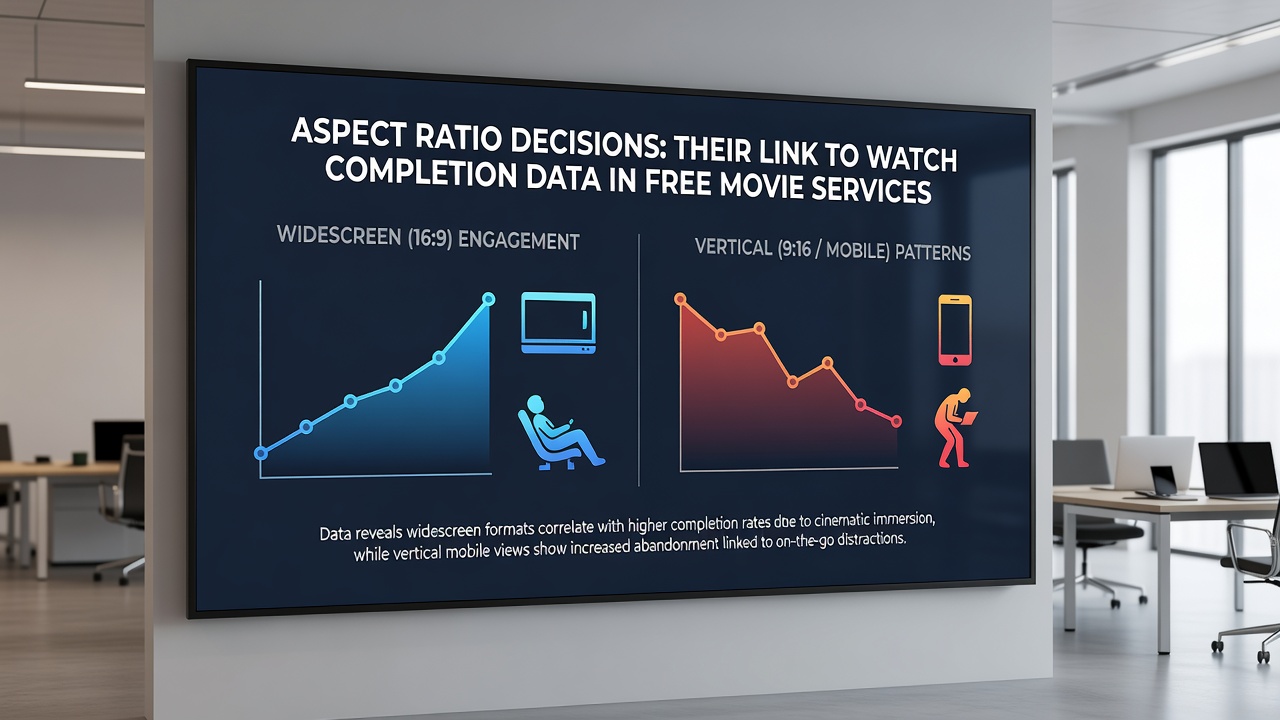
Mobile users encounter aspect ratio adjustments differently than television viewers, and completion data reflect those differences. Smartphones default to vertical orientation, so platforms that auto-rotate or provide manual selection tools report fewer early exits when the original ratio remains intact. Desktop and tablet sessions display steadier finish rates across ratios, yet evidence indicates that letterboxed content still outperforms stretched versions on larger screens. Analysts tracking sessions in August 2026 observed that viewers who began films on smart TVs finished a larger share of 1.85:1 titles compared with those who started the same content on phones without orientation support.
Genre-Specific Observations
Westerns and epics released before 1970 show pronounced retention advantages when presented in their native ratios, while contemporary thrillers maintain consistent completion regardless of modest cropping. Horror films cropped to 16:9 sometimes lose atmospheric elements that occupy the edges of wider frames, and data logs indicate corresponding increases in pause or exit events during key sequences. Animation titles adapted for free services demonstrate the opposite trend in several archives, with tighter framing correlating to higher finish percentages among younger viewer cohorts. Researchers cross-referencing these patterns with production metadata have isolated cases where ratio adjustments alone accounted for double-digit swings in average watch duration.
Technical Implementation Across Platforms
Services implement aspect ratio handling through metadata flags, player controls, and automated detection scripts, and each method produces distinct outcome distributions in completion statistics. Platforms that surface a ratio selector at the start of playback record lower abandonment during opening credits than those applying fixed settings. Open-access libraries that default to original ratios while offering quick switches to full-screen mode show reduced early drop-off compared with services that force a single presentation style. Reports from the Australian Communications and Media Authority note that these interface choices interact with regional device preferences, producing varied completion curves across markets.
Conclusion
Completion data collected from free movie services continue to highlight connections between aspect ratio handling and viewer retention, with patterns holding across multiple device categories and content types. Analysts track these metrics to refine delivery settings, and ongoing collection through 2026 supplies additional granularity on how specific ratios align with finish rates in different genres. The evidence accumulated so far demonstrates that technical presentation decisions register directly in aggregate watch behavior without requiring subjective interpretation of content quality.