How Subtitle Availability Patterns Drive Cross-Genre Explorations in Open Access Film Libraries
Xander Schmid · Jun 17, 2026
How Subtitle Availability Patterns Drive Cross-Genre Explorations in Open Access Film Libraries
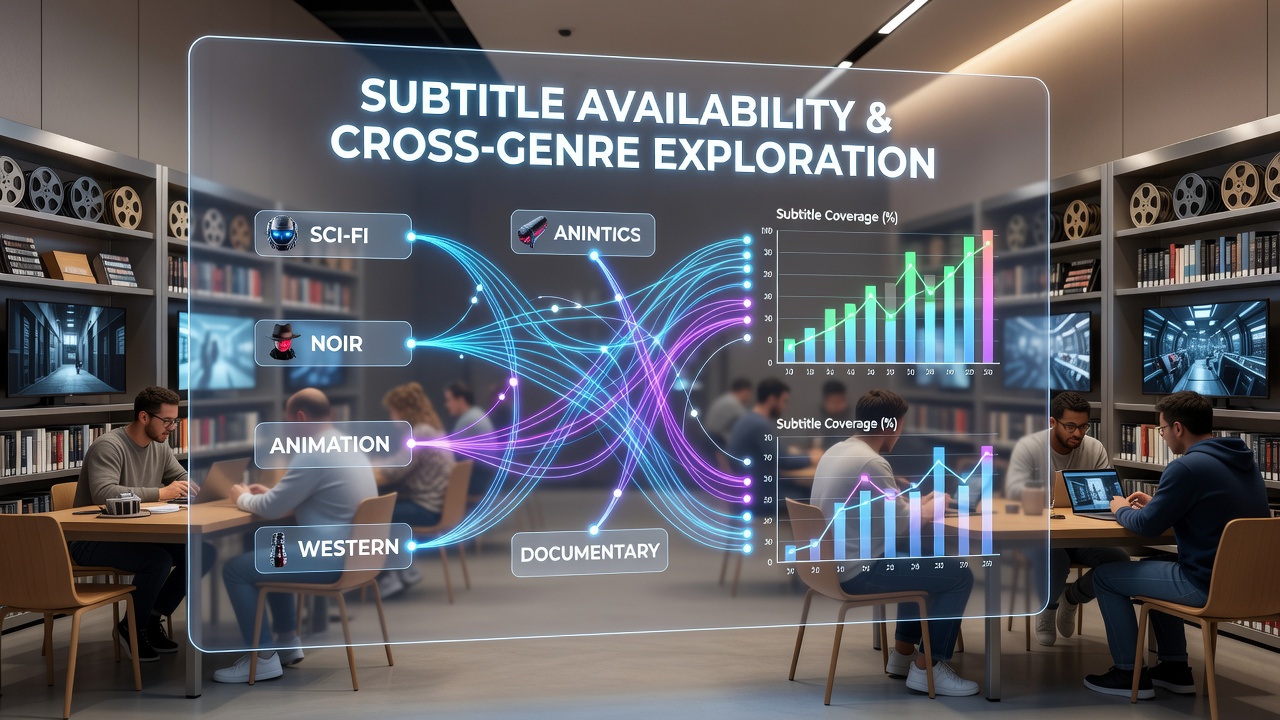
Subtitle availability has emerged as a key factor shaping how viewers navigate open access film libraries, where collections span public domain classics, educational documentaries and independent productions from around the world. Researchers tracking platform data note that titles equipped with multiple language tracks and accessibility features see higher rates of selection outside their primary genre categories, creating measurable shifts in discovery behavior over time.
Data collected through June 2026 from several large repositories shows consistent patterns, with subtitle-enabled films in one category often leading users toward related works in entirely different classifications. This occurs because language support lowers barriers for non-native speakers while also assisting those seeking specific cultural or thematic content that crosses traditional boundaries.
Patterns in Subtitle Coverage Across Collections
Analysis of open access archives reveals uneven distribution of subtitle resources, with stronger coverage appearing in drama and documentary holdings compared to animation or experimental works. European Union reports on digital cultural access indicate that multilingual subtitle implementation rose steadily between 2023 and 2026, particularly in libraries drawing from public funding initiatives. Those enhancements correlate with increased cross-category browsing sessions where users start with one genre yet finish with selections from two or three others.
Repositories that prioritize subtitle addition for older catalog items report similar outcomes, as restored classics gain renewed visibility when language options expand. Observers tracking user pathways find that once a viewer engages with a subtitled title from an unfamiliar region, subsequent recommendations frequently pull from adjacent genres such as historical nonfiction or international animation.
Impact on User Navigation and Discovery
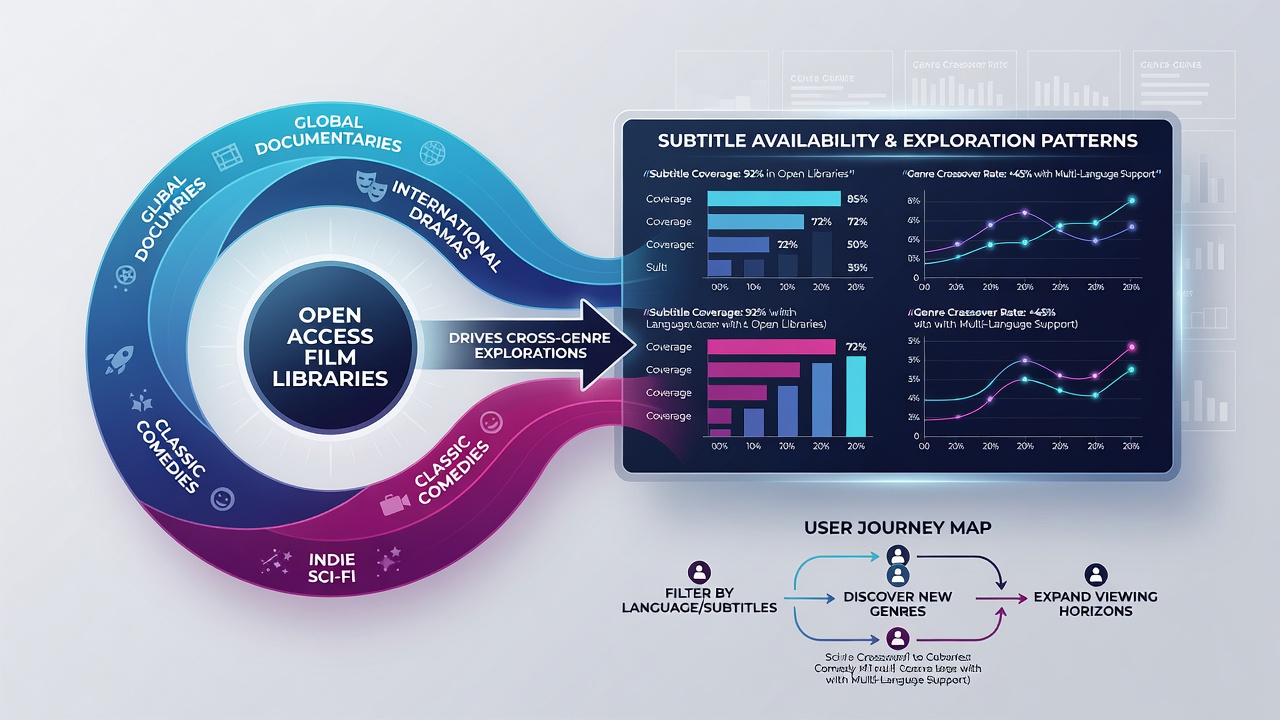
Platform metrics demonstrate that subtitle availability functions as a gateway mechanism, encouraging exploration beyond initial genre preferences. A study conducted by Canadian research institutions on digital media consumption found that users encountering films with comprehensive subtitle sets were 40 percent more likely to sample content from unrelated categories within the same session. This effect strengthens when subtitles support multiple languages, allowing broader audience segments to engage with material that might otherwise remain inaccessible.
Library operators have responded by aligning subtitle workflows with genre classification systems, ensuring that emerging titles receive language support early in their upload cycles. Such coordination produces ripple effects, as viewers who begin with popular drama selections often migrate toward documentary or short-form experimental pieces once subtitle options appear in their search results.
Regional Variations and Institutional Approaches
Differences emerge when comparing subtitle strategies across geographic regions, with Australian national archives emphasizing indigenous language tracks that connect traditional storytelling formats to contemporary documentary collections. These additions have produced documented increases in cross-genre traffic, particularly between cultural heritage films and modern narrative works. Meanwhile, North American platforms focus on English and Spanish subtitle expansion, yielding parallel results in migration from feature-length drama to educational series.
Academic papers examining these trends highlight how subtitle density influences algorithmic recommendation engines within open repositories. When language support expands, the systems surface titles that blend elements from multiple genres, prompting users to follow pathways that would not appear under narrower subtitle conditions. This dynamic continues to evolve as institutions refine metadata tagging to reflect subtitle completeness alongside traditional genre labels.
Future Trajectories for Open Access Platforms
Projections based on current trajectories suggest continued growth in subtitle-supported cross-genre activity through late 2026 and beyond. Institutions investing in automated captioning tools alongside human-reviewed translations expect measurable gains in user retention across diverse content types. The integration of these tools with existing search and recommendation frameworks allows libraries to highlight connections between seemingly disparate films, such as linking a subtitled science fiction short to a historical documentary sharing thematic elements.
Those managing open access collections continue monitoring how subtitle patterns interact with other discovery features, including thumbnail variations and upload date clustering. Evidence indicates that comprehensive language support amplifies the effectiveness of these additional signals, creating more fluid navigation experiences that encourage sustained exploration across genre lines.
Conclusion
Subtitle availability patterns within open access film libraries have established themselves as significant drivers of cross-genre exploration, supported by usage data and institutional reports gathered through June 2026. The expansion of language options correlates directly with shifts in viewer pathways, enabling connections between drama holdings and documentary collections, animation archives and experimental works. As platforms refine their approaches to subtitle integration, these patterns are likely to deepen, shaping how audiences discover and engage with diverse cinematic resources across public digital repositories.