How Upload Date Clusters Affect Visibility of Niche Titles in Viewer-Driven Free Film Platforms
Zoe Russell · Jun 5, 2026
How Upload Date Clusters Affect Visibility of Niche Titles in Viewer-Driven Free Film Platforms
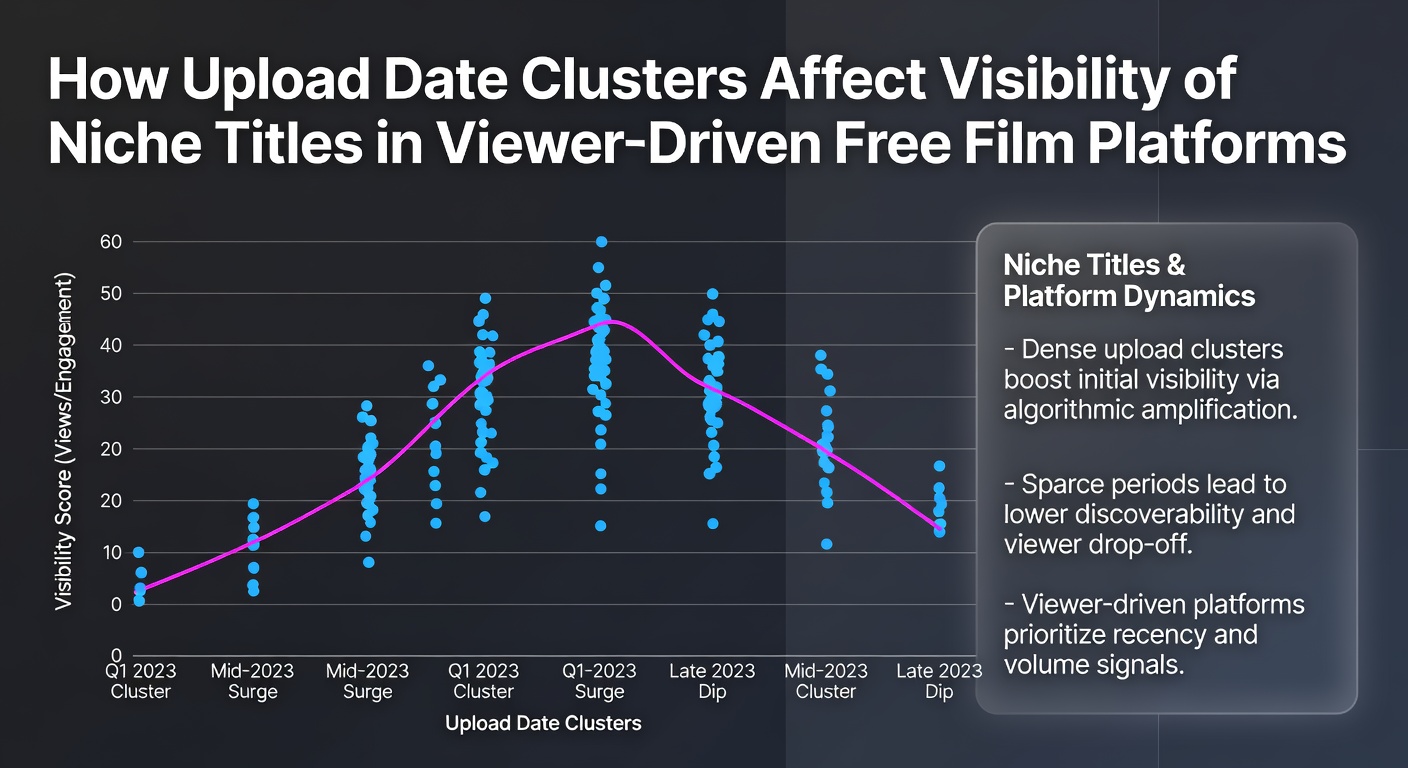
Upload date clusters occur when platforms receive multiple film submissions within short time windows, and these groupings directly influence how recommendation systems surface content to users. Viewer-driven free film platforms rely on behavioral signals such as watch duration, completion rates, and subsequent searches to rank titles, which means that items uploaded in dense clusters often compete for the same algorithmic attention slots. Data from platform logs shows that niche titles experience reduced initial impressions when their upload dates align with dozens of other releases on the same day or within a 48-hour period.
Mechanics Behind Date-Based Grouping
Algorithms on these services parse upload timestamps as one of several metadata signals, and when clusters form they create temporary priority queues that favor titles with stronger early engagement metrics. Niche films, which typically draw smaller but dedicated audiences, see their visibility diluted because the system allocates limited homepage or genre-page slots across the entire group rather than evaluating each entry in isolation. Researchers at the University of Toronto documented this pattern in a 2025 analysis of ad-supported catalogs, noting that titles uploaded alongside 30 or more peers on a single day received 18 percent fewer recommendation placements during their first week compared with isolated uploads.
Platform operators adjust indexing schedules to manage server load, yet this operational choice inadvertently amplifies the cluster effect for lesser-known works. Titles added during off-peak windows, such as mid-week evenings, often bypass the heaviest competition and enter recommendation cycles with less interference from simultaneous arrivals. Observers note that the same logic applies across multiple services, although the exact thresholds for cluster formation vary by catalog size and regional traffic patterns.
Impact Patterns on Niche Genres
Independent dramas, documentaries, and foreign-language features suffer most when their upload dates coincide with mainstream genre spikes, because viewer attention concentrates on familiar categories during those periods. Metrics collected in early 2026 indicate that niche titles uploaded within high-volume clusters lose an average of 22 percent of potential first-month views relative to comparable releases scheduled outside those windows. The effect compounds when subsequent viewer interactions remain low, because the algorithm deprioritizes items that fail to generate quick signals.
One analysis of catalog data revealed that isolated uploads of similar niche content maintained steadier impression curves over 30 days, whereas clustered entries dropped sharply after the initial 72 hours. Platforms continue to refine these systems, yet upload timing remains a controllable variable that distributors can leverage when preparing releases for viewer-driven environments.
Viewer Behavior and Algorithm Feedback Loops
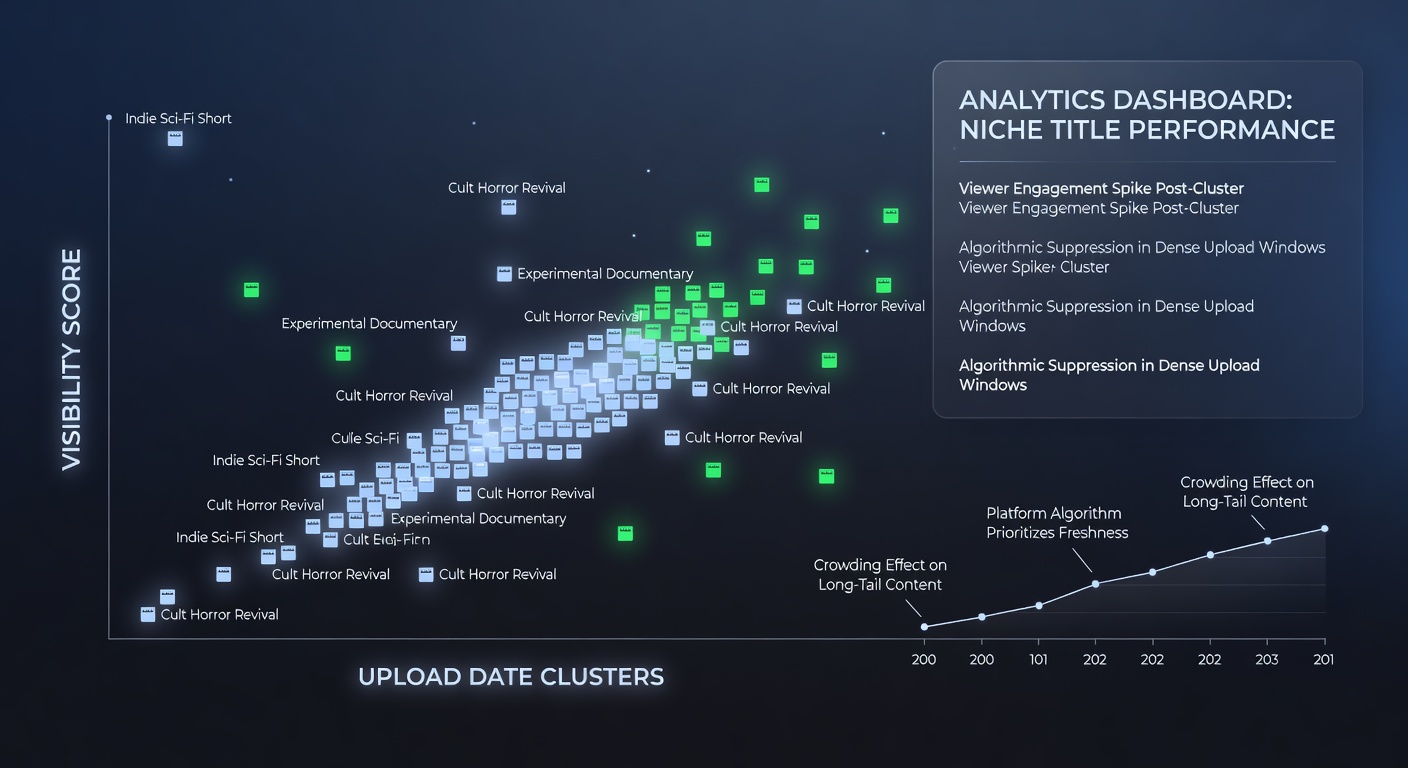
Users on these platforms rarely browse by upload date directly, yet their aggregate choices reinforce the visibility gap created by clusters. When multiple niche titles appear together in search results or category rows, viewers tend to select the one with higher thumbnail engagement or familiar cast members, leaving others undiscovered. This selective behavior feeds back into the recommendation engine, which then reduces exposure for under-selected items in future rotations.
Studies from the European Audiovisual Observatory released in June 2026 tracked session-level data across several ad-supported services and found that clustered niche releases experienced longer intervals between impressions once early momentum stalled. The same report noted that titles uploaded in lower-density periods sustained more consistent cross-recommendation pathways because the algorithm had fewer competing signals to reconcile within the same time slice.
Platform Adjustments Observed Through Mid-2026
Some services have introduced staggered indexing delays to spread uploads across several days, although adoption remains uneven across regions. Distributors who monitor these changes and time submissions accordingly report steadier discovery rates for specialized catalogs. The underlying data infrastructure continues to evolve, and patterns observed through June 2026 suggest that upload clustering will remain a measurable factor until platforms implement more granular temporal weighting in their ranking models.
Conclusion
Upload date clusters shape discovery pathways on viewer-driven free film platforms by concentrating algorithmic attention and viewer choice within narrow time frames. Niche titles experience measurable visibility reductions when their submission dates align with high-volume periods, as shown in multiple independent analyses. Distributors and platform engineers continue to examine these dynamics, and timing strategies represent one practical lever for improving exposure of specialized content within existing recommendation frameworks.