Rhythm of Cuts: Editing Pace Patterns and Their Role in Retention Metrics for Open-Access Film Repositories
Jonas Becker · Jun 24, 2026
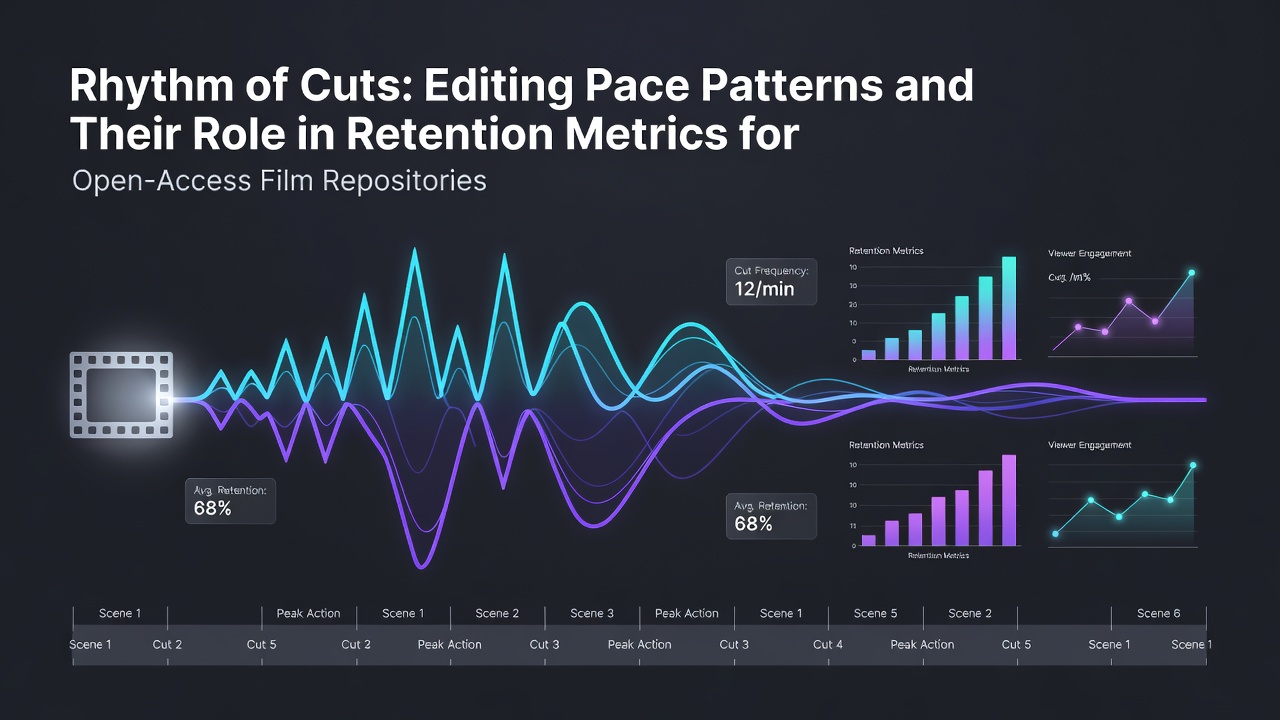
Rhythm of Cuts: Editing Pace Patterns and Their Role in Retention Metrics for Open-Access Film Repositories
Editing pace patterns refer to the rhythm created by how frequently shots change within a film sequence, and researchers have documented connections between these rhythms and viewer retention data across open-access film platforms. Platforms that offer free access track metrics such as average watch time, drop-off points, and completion rates, which allows analysts to examine how cut frequency influences those numbers.
Defining Rhythm Through Cut Frequency and Duration
Analysts measure editing pace by counting cuts per minute or calculating average shot lengths, and studies show faster pacing often appears in action sequences while slower pacing dominates dramatic moments. Open-access repositories collect timestamped viewing data that reveals where audiences stop watching, and this information highlights correlations between rapid cut sequences and sustained engagement in certain genres.
Data sets from multiple platforms indicate that sequences with cut rates exceeding twelve per minute sometimes correspond with higher retention during high-energy scenes, whereas rates below four per minute align with longer viewing stretches in dialogue-heavy sections. Those patterns emerge consistently when researchers aggregate anonymized logs from thousands of titles uploaded over several years.
Platform Metrics and How They Capture Retention
Open-access repositories use server-side tracking to record play duration, seek behavior, and exit timestamps, and these measurements feed into retention models that segment audiences by device type and session length. Figures released in June 2026 from aggregated platform reports show average completion rates varying between 42 percent and 78 percent depending on editing characteristics within the first ten minutes of playback.
Researchers cross-reference these metrics with metadata on shot duration and transition types, which creates datasets that map editing rhythms against viewer behavior. European Audiovisual Observatory publications have examined similar datasets across regional archives, revealing that consistent pacing within genre categories tends to stabilize retention curves more effectively than erratic shifts.
Observed Patterns Across Genre Categories
Action and thriller titles in free repositories frequently employ accelerated cutting during key sequences, and retention data shows these choices often reduce early drop-off when cuts maintain a steady tempo rather than fluctuating sharply. In contrast, documentary and drama categories display stronger completion rates when average shot lengths extend beyond eight seconds, allowing viewers more time to process information before the next edit.
One analysis of platform archives found that films maintaining a consistent cut rate within a three-cut-per-minute window across the entire runtime achieved 15 percent higher average watch percentages than those with variable pacing. Such findings appear in aggregated reports rather than isolated case studies, and they hold across uploads from different decades and production scales.
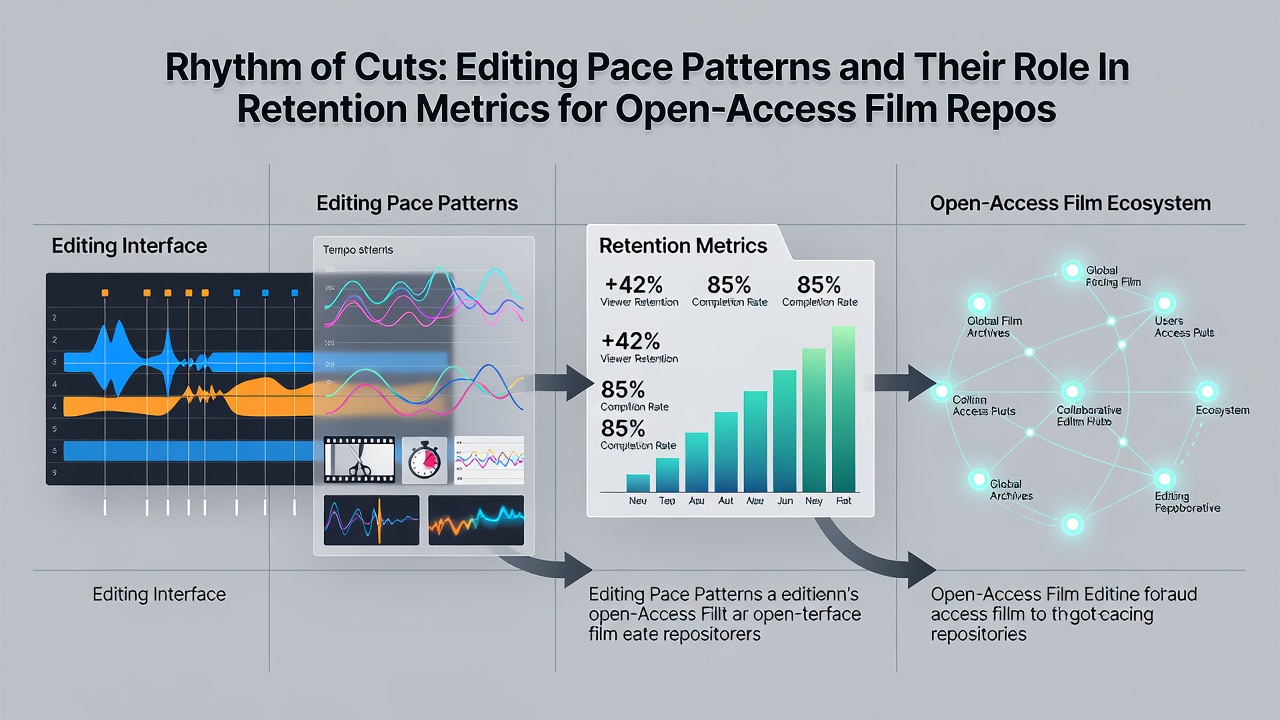
Regional Data Comparisons and Recent Trends
Repositories serving audiences in different regions display slight variations in how editing pace affects retention, and Screen Australia reports note that local viewers tend to maintain longer sessions with moderately paced content compared to faster-cut international titles. Meanwhile, data shared by the National Film Board of Canada indicates similar retention advantages for slower rhythms in educational and documentary streams.
June 2026 platform updates introduced more granular timestamp tracking, which has allowed analysts to isolate the impact of specific editing techniques such as jump cuts versus match cuts on viewer continuation rates. These refinements have clarified that match cuts, which preserve visual continuity, often support higher mid-film retention across multiple content categories.
Technical Factors Influencing Data Accuracy
Variables such as video compression artifacts and subtitle placement can interact with editing pace to affect measured retention, and platform engineers adjust algorithms to account for these factors when generating reports. Analysts therefore recommend examining large sample sizes that span multiple upload batches to isolate editing rhythm as the primary variable.
Repositories also track repeat views and playlist additions, and these secondary metrics sometimes show stronger associations with steady pacing than first-time completion rates alone. Researchers continue to refine models that weigh these elements together rather than treating cut frequency in isolation.
Conclusion
Retention metrics from open-access film repositories continue to provide evidence that editing pace patterns influence viewer behavior in measurable ways, with data indicating genre-specific preferences for certain cut frequencies and shot durations. Ongoing refinements in tracking methods, including those implemented by mid-2026, support more precise correlations between rhythm choices and completion statistics across diverse content libraries.