Viewer Sentiment Clusters Reshaping Genre Classifications in Free Movie Repositories
Jonas Becker · May 29, 2026
Viewer Sentiment Clusters Reshaping Genre Classifications in Free Movie Repositories
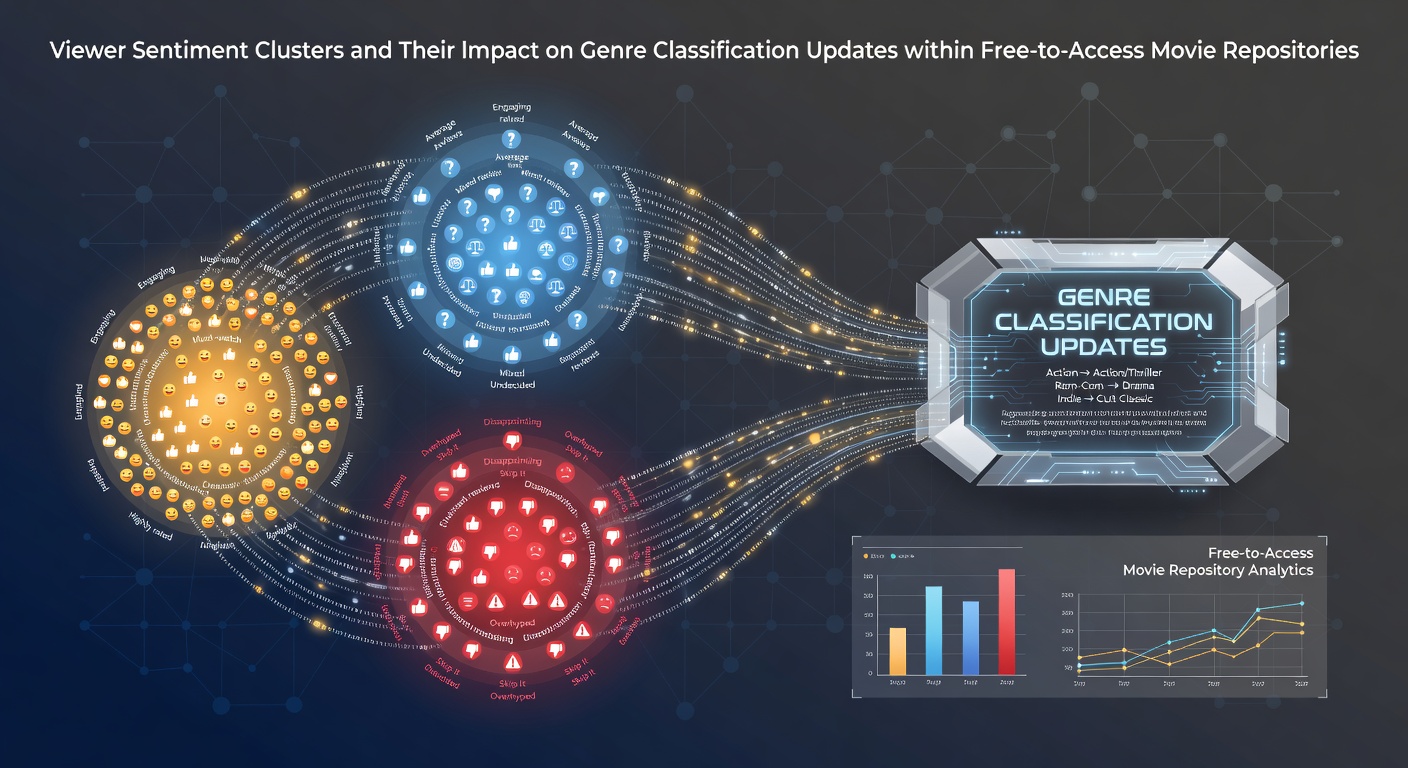
Viewer sentiment clusters emerge when platforms aggregate feedback from millions of users on free-to-access movie sites, and researchers group those responses into distinct patterns based on emotional reactions to plot elements, pacing, and character arcs. These clusters form through algorithmic processing of ratings, comments, and watch-time data that free repositories collect daily, which allows operators to detect shared preferences across large audiences rather than relying on traditional genre labels alone. Platforms notice that one cluster might consistently praise fast-paced action sequences while another expresses frustration with the same films due to predictable endings, which creates opportunities for refined category assignments that better match user expectations.
Data from open digital archives shows these clusters influence how genres get updated because administrators review aggregated sentiment scores to split or merge categories when patterns become clear. For instance a broad "thriller" tag might divide into suspense-focused and psychological-subgenre sections after clusters reveal divergent viewer reactions, and this adjustment happens through regular audits that track shifts in feedback volume. Observers note the process relies on natural language processing tools that scan reviews for recurring phrases, which helps identify when existing classifications no longer align with how people actually experience the content.
Mechanisms Behind Cluster Formation and Genre Adjustments
Free movie repositories build sentiment clusters by combining quantitative metrics like completion rates with qualitative inputs from user comments, and this combination produces segments such as "high-engagement mystery enthusiasts" or "disappointed romance viewers" that guide classification changes. Researchers have tracked how these groups evolve over months as new titles enter the catalog, which leads administrators to adjust tags when a cluster grows large enough to warrant a dedicated subcategory. The updates occur because mismatched genres reduce watch completion, so platforms respond by testing revised labels on subsets of users before rolling them out broadly.
Studies indicate that sentiment analysis often highlights overlooked connections between films, such as linking certain sci-fi entries with horror elements when clusters show overlapping praise for tension-building techniques, and repositories then incorporate those links into updated genre roadmaps. This approach draws from large datasets that include viewing histories across multiple devices, which provides a more complete picture than isolated ratings alone could offer. In May 2026 several archives implemented batch updates after cluster analysis revealed growing viewer interest in hybrid categories that blended adventure with speculative fiction.
Effects on Discovery and Repository Organization
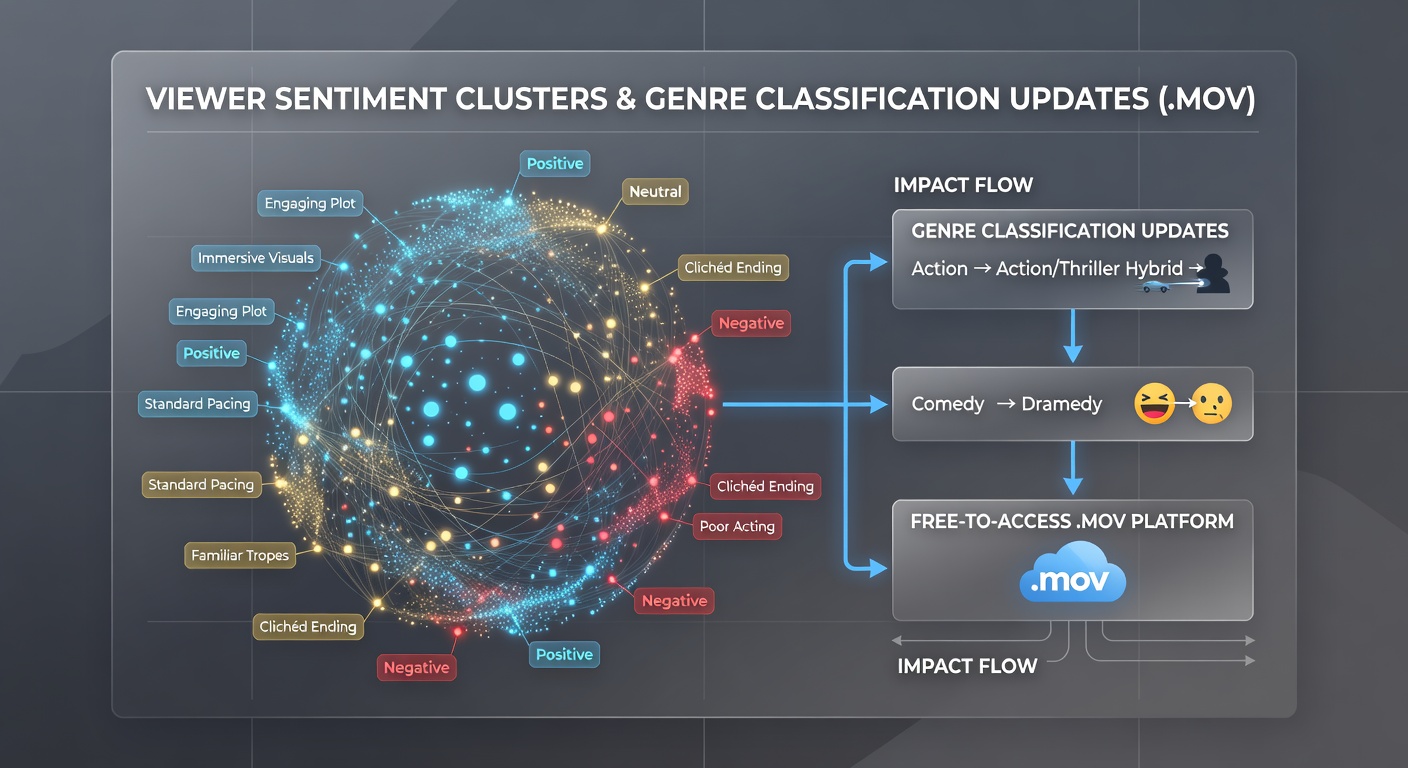
Genre classification updates driven by sentiment clusters improve content discoverability because users encounter films grouped according to actual reception patterns instead of static industry labels. Platforms report that refined categories increase session duration when recommendations align with cluster preferences, and this occurs through iterative testing that compares engagement before and after tag changes. Those managing free repositories often prioritize clusters with the highest activity levels, which leads to faster incorporation of feedback into navigation menus and search filters.
One case involved an archive that split its drama section after clusters demonstrated separate appreciation for character-driven stories versus plot-heavy narratives, and the change resulted in measurable shifts in how titles surfaced in recommendations. Data shows such adjustments help surface older films that align with emerging sentiment groups, which extends the visibility of catalog entries that might otherwise remain buried under broad tags. European Audiovisual Observatory reports on digital media consumption highlight similar patterns across multiple platforms where sentiment-driven refinements altered user pathways through open archives.
Recent Developments and Broader Industry Patterns
By spring 2026 several free repositories had adopted real-time monitoring systems that flag when sentiment clusters reach thresholds requiring genre review, and these systems integrate with existing metadata frameworks to propose updates automatically. The process involves cross-referencing cluster data with external sources like academic analyses of film reception, which adds context to platform-generated insights. Australian research institutions have contributed studies on viewer behavior in ad-supported environments that support the use of cluster analysis for maintaining accurate classifications over time.
Repositories also examine how clusters interact across regions, noting that sentiment patterns in one market sometimes prompt global genre adjustments when similar feedback appears elsewhere. This interconnected approach ensures classifications remain relevant as new content arrives and audience tastes shift, while maintaining consistency across large collections. Platforms track the frequency of these updates to balance responsiveness with stability, which prevents constant reorganization that could confuse users.
Conclusion
Viewer sentiment clusters continue to drive measurable changes in how free-to-access movie repositories organize and present their catalogs, with updates reflecting aggregated reactions rather than fixed industry standards. The ongoing integration of cluster analysis into classification workflows supports more precise navigation tools that match content to audience preferences across diverse user bases. As these methods mature, archives maintain adaptability through systematic review cycles that incorporate fresh data while preserving core organizational structures.